A stairlift can make a multi-storey home workable again for a senior or someone with limited mobility. But the path from “we need one” to “it’s installed and working well” involves a few practical questions that families don’t always think about until they’re mid-process.
None of these challenges are dealbreakers; most have straightforward solutions. But knowing them in advance makes the whole experience smoother.
Staircase Width
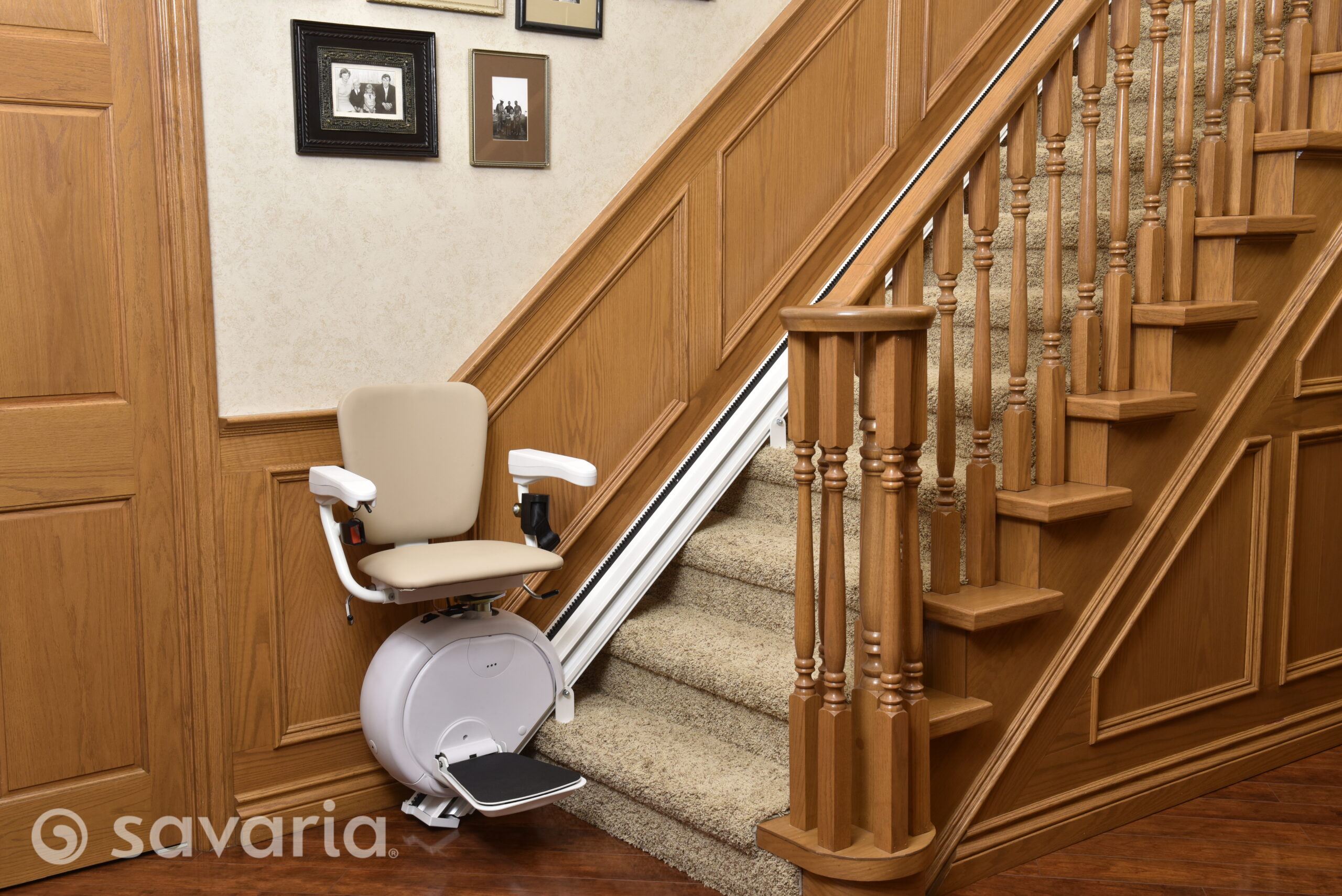
The most common concern is whether the staircase is wide enough. Most straight stairlifts require a minimum clear width of around 28 inches on the tread. The lift itself takes up roughly 18–20 inches when folded, leaving usable space for other people to pass.
Narrower staircases aren’t automatically disqualifying, but they do affect which models are compatible. If other household members including those using a walker or rollator need to use the stairs alongside the stairlift, clearance becomes especially important to measure carefully.
Straight vs. Curved Staircases
Straight staircases are the simplest and most affordable to fit. Curved staircases with a landing, a turn, or a spiral configuration require a custom-built rail, which increases both cost and lead time.
If your home has a straight staircase with a small landing partway up, that layout may still qualify as a straight installation depending on the angle. A proper assessment will confirm this before any commitment is made.
Doorways and Landings at the Top and Bottom
Where the stairlift starts and ends matters as much as the staircase itself. At the bottom, the footrest needs to fold up fully when not in use so it doesn’t block a hallway or door. At the top, there needs to be enough space for the user to safely stand and transfer ideally without immediately stepping into a tight doorframe or corner.
If the top landing opens directly into a bedroom being used as a homecare setup with an adjustable hospital bed, the transfer point between the stairlift and the room needs to be clear and easy to navigate.
Power Outlet Access
Stairlifts run on a standard household outlet, typically positioned near the top or bottom of the staircase. If there’s no outlet nearby, an electrician will need to install one before the stairlift goes in. This is a minor addition but worth factoring into your timeline and budget.
Most stairlifts also charge continuously while parked, so they stay operational even during a brief power outage a feature worth confirming with your supplier.
Obstructions Along the Rail Path
Light switches, wall-mounted handrails, radiators, and baseboards can all interfere with the rail path. In most homes, minor adjustments relocating a light switch, trimming a baseboard are all that’s needed. A pre-installation home visit will identify anything that needs to move.
It’s also worth checking whether the staircase wall has a handrail on both sides, as some families add one opposite the stairlift for additional support. Products like tub and grab bars handle similar safety needs in bathrooms, but the principle of stable grip points throughout the home applies everywhere.
Planning the Rest of the Home at the Same Time
Installing a stairlift is often the first step in a broader home accessibility review. Families who go through this process frequently discover other areas that could use attention: bathroom safety, bedroom setup, or entrance accessibility.
If the person using the stairlift also needs support with bathing, shower chairs, transfer benches, and grab bars are worth evaluating at the same time. Addressing multiple areas in one visit is more efficient and helps ensure the home works as a complete, safe environment.
Talk to MedNation Before You Measure
Getting the right stairlift starts with the right assessment. MedNation works with families across Oakville, Toronto, Mississauga, and the GTA to match the right equipment to the actual layout of each home.
Browse our stairlift options or contact us online to arrange a consultation.
Related Posts